Consortium on Competitiveness and Cooperation · Milan · June 2–7, 2026

Strategic Identity Disclosure

Why Business Owners Disclose Marginalized Identities


Kyle Emory McCullers · Ross School of Business, University of Michigan

Questions, pushback, and wild ideas welcome.

1 / 24
The decision in the data

Same owner, same brand — three different disclosure decisions


Cloudy Donut Co. logo

Cloudy Donut Co.  ·  Founded Baltimore, MD  ·  Founders: Derrick Faulcon & Zewiditu Jewel  ·  First Black-owned food & beverage business in Brooklyn Heights and Nolita
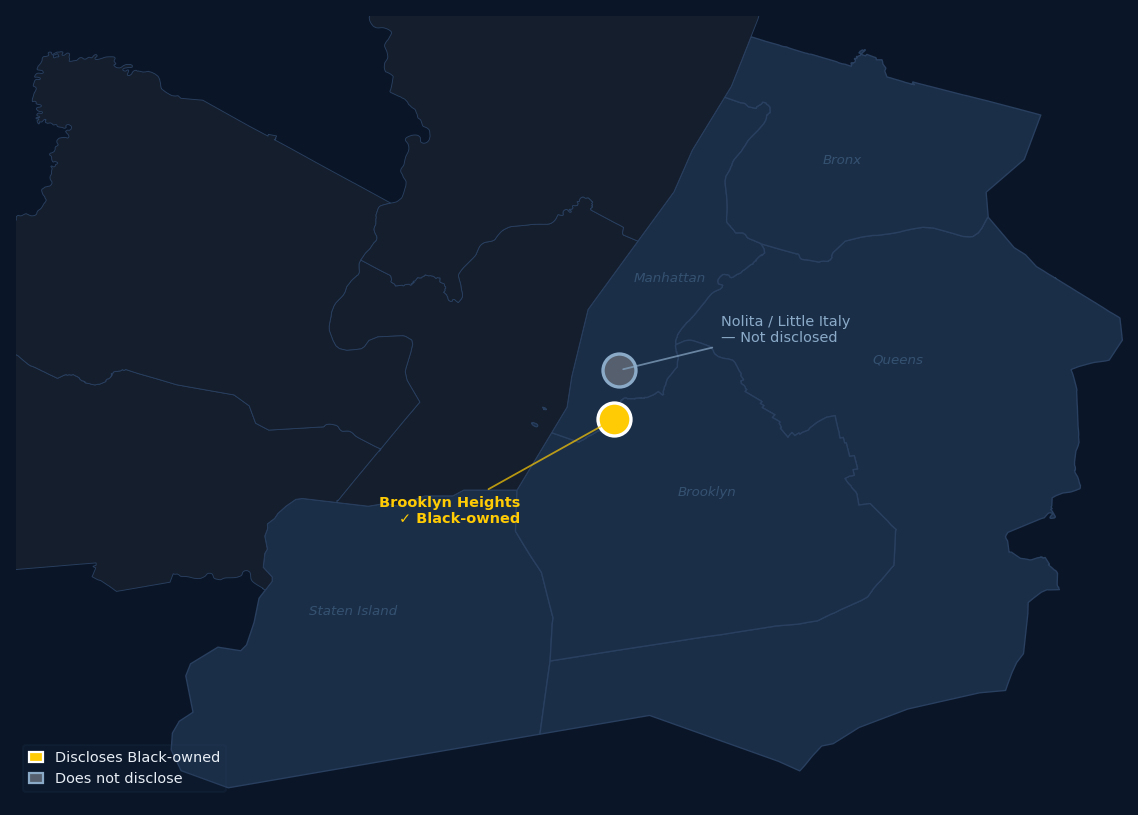
Map of NYC showing Brooklyn Heights (discloses) and Nolita (does not disclose) Cloudy Donut locations

Brooklyn Heights, NY

14 Columbia Pl · 11201

Black-owned ✓

Nolita / Little Italy, NY

209 Mott St · 10012

Not disclosed —
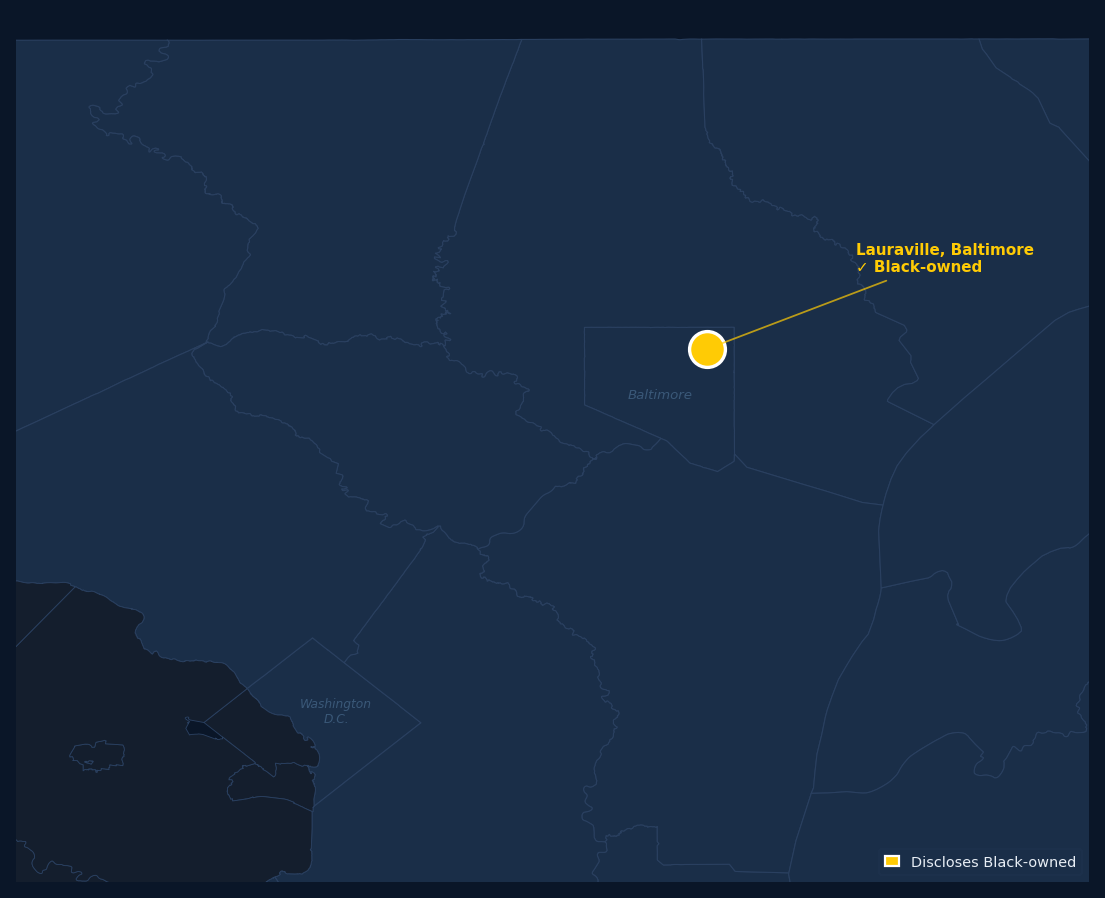
Map of Baltimore showing Lauraville Cloudy Donut location (discloses)

Lauraville, Baltimore, MD

4311 Harford Rd · 21214

Black-owned ✓

Why would the same business owner make different decisions in different places?
2 / 24
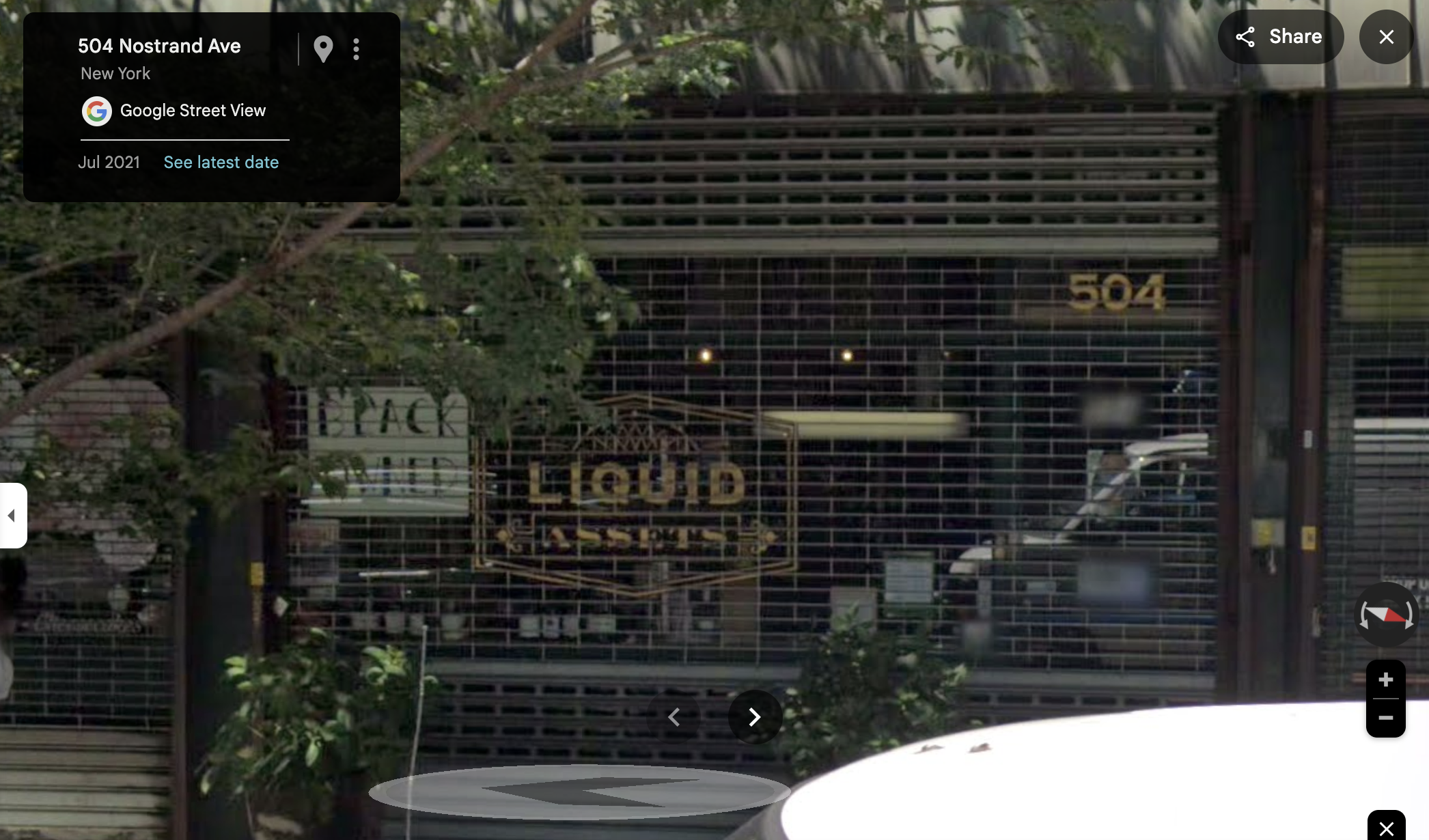
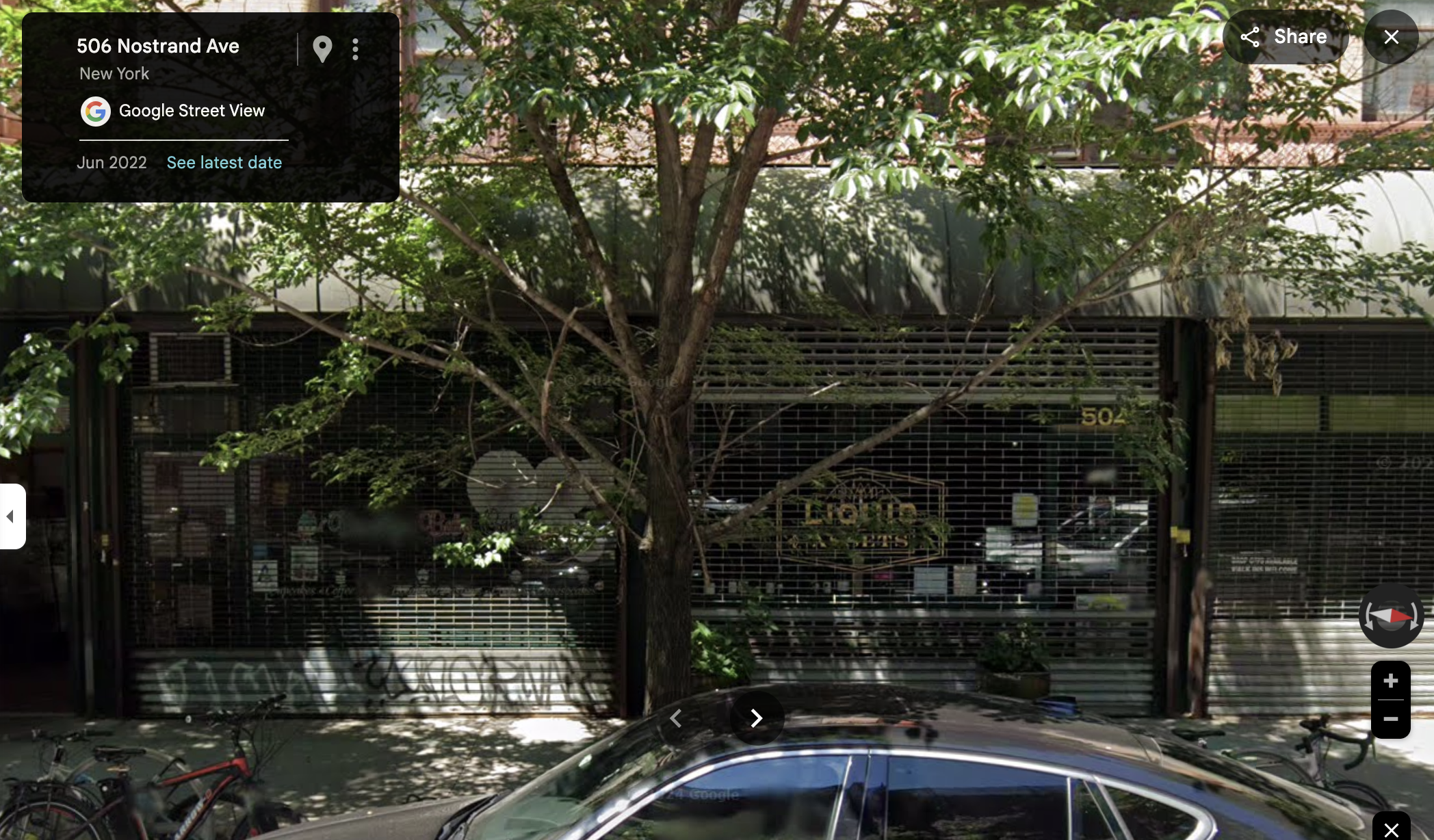
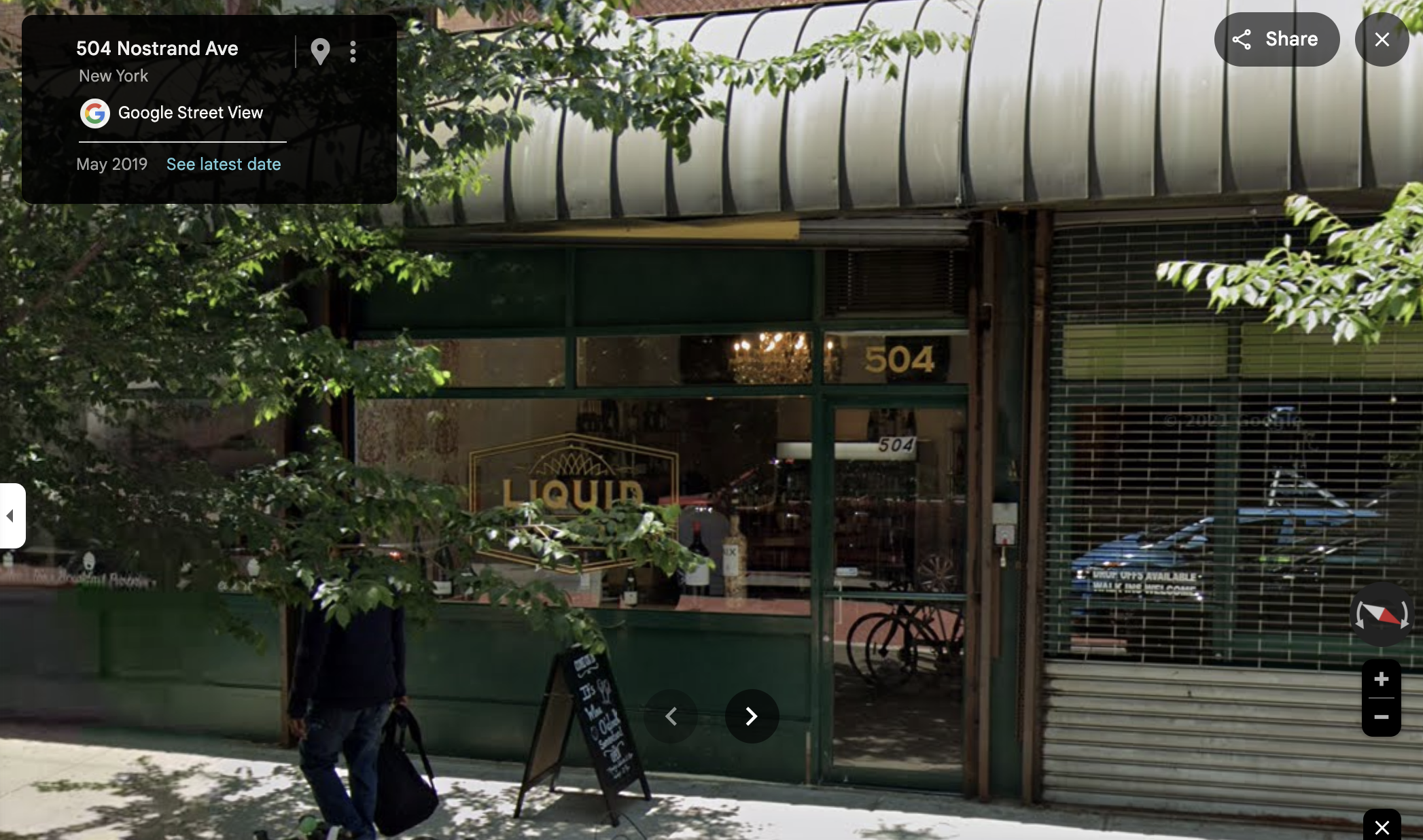
Liquid Assets · 504 Nostrand Ave · Bed-Stuy, Brooklyn
Liquid Assets, May 2019
Before May 2019
Liquid Assets, July 2021 — Black-owned sign
Disclosure July 2021
Black-owned ↑
Liquid Assets, June 2022
After June 2022

Source: Google Street View

3 / 24
The core tension

Disclosure simultaneously attracts and repels


Black-owned businesses · 2020

"How The Black Lives Matter Movement Boosted Local Black-Owned Businesses"

GBH · 2021

"Black businesses still face systemic racism, even from well-meaning customers"

Washington Post · 2020

Asian-owned businesses · COVID-19

"The Best AAPI-Owned Businesses to Shop Right Now"

NBC News Select

"Reports of Anti-Asian hate crimes rose nearly 150% in major U.S. cities"

CBS News · 2021

Palestinian-owned businesses · 2023

"A Palestinian-owned business guide to show solidarity"

USA Today · 2023

"Jewish groups call for boycott of pro-Palestinian businesses"

Forward · 2023

Latino-owned businesses · 2024–2025

"Support Lake Street Latino businesses as immigration fears keep customers away"

Star Tribune · 2025

"Hispanic businesses in Montgomery feeling 'hunted' after triple-slaying"

NBC News · 2024

The solidarity signal is made necessary by discrimination exposure. Visibility attracts aligned customers and invites retaliation simultaneously.

Some find gains (Kim & Liu, 2025) · Others find clear penalties (Nunley et al., 2011; Doleac & Stein, 2013; Younkin & Kuppuswamy, 2018) · Some support is symbolic (Sharma, Frake & Watson, 2025)

Social identities have long been grounds for discrimination, marginalization, and even violence, and were historically concealed from potential consumers. Du Bois (1935) · Bonilla-Silva (1997) · Acker (2006) · Phillips & Kim (2009)

4 / 24
Research Question

"Why would a business owner voluntarily disclose a marginalized identity?"

5 / 24
Theory

Disclosure is a two-stage decision


Stage 1: All three required

Marginalized identity

Owner holds a stigmatized or discriminated identity

Positioning discretion

Owner-operator with direct agency over how the business presents

Legitimacy beliefs

Views identity as a potentially legitimate competitive dimension

Structural: any absent condition forecloses disclosure before Stage 2 is reached.

only if
all met

Stage 2: Either suffices

Bounded solidarity

Co-ethnic in-group reciprocity · proxy: county Black pop. share

OR

Generalized solidarity

Values-aligned ally support · proxy: Democratic vote margin

OR

Identity commitment

Moral obligation independent of market calculation

Perceived: owners differ even when structural conditions are identical.

Identity is not inherently a resource; it becomes one only when structural conditions permit and perceived solidarity conditions activate it.

6 / 24
Theory · Mechanisms & Hypotheses

Two solidarity structures, three testable predictions


Bounded Solidarity

Co-ethnic in-group reciprocity. When a neighborhood shares the owner's identity, preferential patronage is expected and credible.

Portes & Sensenbrenner, AJS (1993)

Ideal statement

"I know my neighborhood will show up."

Proxy: county Black population share

Generalized Solidarity

Values-aligned out-group allies. When the broader political community embraces equity norms, disclosure risk falls and cross-group demand rises.

Greenberg & Mollick (2017)

Ideal statement

"The community broadly values what I'm doing."

Proxy: Democratic vote margin

H1

Disclosure increases with county Black population share.

H2

Disclosure increases with Democratic vote margin.

H3

Bounded solidarity's effect shrinks in Democratic counties, where ally demand is already active. (Partial substitution, the paper's decisive test)

H4 (discriminant validity): The interaction effect does not predict Veteran-led disclosure; the mechanism is identity-specific, not a general political correlation.

7 / 24
Theory · H3 Mechanism

Why does co-ethnic density matter less in Democratic counties?


Republican-leaning county

Only one path to perceived demand

Generalized solidarity is absent or hostile. Whether the owner perceives enough demand to disclose depends almost entirely on co-ethnic density. Without a large local Black community, neither solidarity mechanism is active.

Co-ethnic density is critical. Its effect on disclosure is large.

Mobile, AL · 36% Black · Rep +12%

4.7% disclosure rate

Democratic-leaning county

Ally demand already active

Generalized solidarity is engaged. Values-aligned consumers are already primed for identity-based patronage. The owner does not need co-ethnic density to perceive a ready market — generalized solidarity provides an alternative activation pathway.

Co-ethnic density still helps, but its marginal contribution shrinks.

Atlanta, GA · 44% Black · Dem +46%

28.5% disclosure rate

H3 = partial substitution: when generalized solidarity is active, the additional activation value of co-ethnic density shrinks. The two mechanisms are not independent, and not purely additive.

8 / 24
Dataset 1 · Google Maps

4.99 million U.S. business listings

September 2021 cross-section · UCSD Google Places Dataset


4.99MU.S. business listings
3,144Counties covered
~14,000Black-owned disclosed

Identity tag system · opt-in, owner-controlled, publicly visible

Black-owned Women-owned LGBTQ+-owned Latino-owned Asian-owned Veteran-owned Indigenous-owned Disabled-owned

US Census · ACS 5-Year Estimates

County-level Black population share and poverty rate. Anchors the bounded solidarity proxy (J₁).

MIT Election Lab · Presidential Returns

County-level Democratic vote margin, 2020 presidential election. Operationalizes generalized solidarity (J₂).

Unit of analysis: business listings geocoded to county. Outcome: Black-owned tag (0/1). Scope: voluntary platform disclosure, theoretically distinct from MWBE certification or government-contracting-driven disclosure. Census RDC application submitted April 2026 for county-level Black-owned business counts (correct at-risk denominator).

9 / 24
Dataset 1 · Descriptive Statistics

Business-level logit · N = 152,359 businesses · 2,681 counties


Variable Mean SD Min Max
Black-owned disclosed, 2026 (DV) 0.0750.26401
Veteran-owned disclosed, 2026 (H4 contrast) 0.1730.37801
Black population share, county (%) 13.012.50.087.1
Democratic vote margin (2020) +0.1030.320−0.863+0.868
Dem. majority county (binary) 0.6660.47201
Total business listings (log) 8.981.402.2011.76
County poverty rate (%) 12.24.11.859.0
N businesses 152,359 (found 2021 & 2026, complete covariates)
N counties 2,681

N = 152,359 is all businesses found in both the 2021 and 2026 snapshots with complete county covariates, not just disclosed ones. Of these, 7.5% (≈11,400) carry the Black-owned tag in 2026; the rest are the non-disclosing majority. Disclosure is the binary outcome (1/0), not the criterion for inclusion.

Veteran-owned disclosure (17.3%) is included as the H4 discriminant DV. The identical model predicting veteran-led disclosure should show near-zero interaction effects if H3 is specific to racial identity solidarity, not generic political signaling.

10 / 24
Dataset 1 · Geographic Distribution

Black-owned business disclosures · Google Maps

(September 2021)


Dot map of Black-owned business disclosures on Google Maps, September 2021

Concentration in Atlanta, Chicago, Detroit, New York, Houston, and Los Angeles metros. Minimal presence in rural counties regardless of Black population share, consistent with H3: co-ethnic density alone does not predict disclosure without Democratic culture.

11 / 24
Dataset 1 · Results

H1 ✓   H2 ✓   H3 ✓

County controls · SEs clustered by county · N = 152,359 businesses · 2,681 counties


Quadrant finding

Low Black Pop
High Black Pop
High Dem
0.12%J₂ only
0.36%J₁ + J₂
Low Dem
0.08%Neither
0.12%J₁ only

Q1 is 4.5× Q3. J₁ alone barely moves disclosure; political context is the multiplier.

Logit · DV: Black-owned disclosed (2026) · clustered SEs

Variable H1 Bounded H2 Generalized H3 Interaction
Black pop. share (%) 5.286***6.614***
(0.157)(0.434)
Dem. vote margin (continuous) 1.411***
(0.208)
Dem. majority (binary) 0.340***
(0.070)
Black pop. × Dem. majority −1.541***
(0.452)
County controls
N (businesses) · N (counties) 152,359 · 2,681

*** p<.001 · SEs clustered by county (N=2,681) · controls: log county population, poverty rate · state FE in robustness

The negative H3 interaction is the key result: in Democratic counties, J₂ is already active; the marginal contribution of co-ethnic density shrinks. Bounded and generalized solidarity are partial substitutes, not complements.

12 / 24
Dataset 1 · Coefficient Plot

Average marginal effects · 95% confidence intervals


−0.2 −0.1 0 0.1 0.2 0.3 0.4 0.5 0.6 Black pop. × Dem. majority (H3 interaction) −0.101** Black population share (%) (H1 bounded solidarity) +0.431*** Democratic majority (binary) (H2 generalized solidarity) +0.022*** Average marginal effect (pp change in disclosure probability)

Black population share is the dominant predictor: a 1 pp increase in county Black share is associated with a +0.43 pp increase in disclosure probability. Being in a Democratic-majority county adds a small but significant +0.022 pp; generalized solidarity provides an additional activation channel.

The negative interaction (H3, −0.101 pp) confirms partial substitution: in Democratic counties, the marginal return to co-ethnic density is 0.10 pp smaller. J₁ and J₂ are neither independent nor purely additive; generalized solidarity attenuates reliance on bounded solidarity.

13 / 24
Dataset 1 · H3 · Geographic Illustration

H3: comparable Black community share, but a 6× disclosure gap


Atlanta vs. Mobile county map showing disclosure dot patterns

Each gold dot = one Black-owned business disclosed on Google Maps. Mobile's Black population share (36%) is 83% of Atlanta's (44%); if disclosure tracked demographics, we'd expect a ≈1.2× gap. We observe 6×.

14 / 24
Dataset 1 · H1 · Geographic Illustration

H1: co-ethnic density gradient is visible on the ground


Durham vs. Prince George's County map showing disclosure dot density

Both counties are strongly Democratic. PG County's Black pop. share is 1.75× Durham's, yet disclosure is 2.5× higher. The disclosure ratio exceeds the demographic ratio: bounded solidarity amplifies beyond headcount.

15 / 24
Dataset 1 · H2 · Geographic Illustration

H2: disclosure persists even where the Black community is small


Seattle and Minneapolis county maps showing disclosure in low-Black-pop Democratic markets

Seattle (6% Black, 5.7% disclosure) and Minneapolis (13% Black, 8.0% disclosure) are strongly Democratic. J₂ (political ally solidarity) activates disclosure even when J₁ (co-ethnic density) is weak.

16 / 24
Dataset 2 · SBA Paycheck Protection Program (PPP)

A verified at-risk population solves the denominator problem


Study 1 maps the pattern. Study 2 isolates the decision.

11.7M Total PPP loan recipients
776K Unique Black-owned businesses (self-reported race)
9,563 Matched to Google Maps · county covariates complete

Why this matters

Google Maps alone cannot identify which businesses could have disclosed but did not. The PPP data provides government-verified Black-owned businesses, the true at-risk population. Matching allows estimation of the true disclosure rate.

Matching procedure

PPP business name + address → fuzzy-matched to Google Maps business listings. Retained matches with high confidence scores. 10,009 initial matches; 9,563 with complete county covariates used in analysis.

True disclosure rate: 7.5%, vs. 0.29% using all Google Maps businesses as denominator.

The 26× difference reflects selection into Google Maps, not a real disclosure rate.

17 / 24
Dataset 2 · Descriptive Statistics

Verified Black-owned businesses · N = 9,563


Variable Mean SD Min Max
Black-owned disclosed (DV) 0.0730.26101
Dem. majority county (binary) 0.8100.39201
Black population share, county (%) 23.415.60.184.3
Total business listings (log) 9.691.153.2211.76
County poverty rate (%) 13.84.43.339.2
N businesses (matched PPP → Google Maps) 9,563 (county covariates complete)

Selection check: matched sample has much higher mean Black pop. share (23.4% vs. 13.0% in GMaps sample) and 81% are in Democratic-majority counties, reflecting concentration of Google-visible Black businesses in majority-minority urban areas.

7.3% disclosure rate is the best available estimate of the true rate among Black-owned businesses with a Google Maps presence. The high Dem-majority concentration (81%) means H2 has limited variation to test in this sample, a key caveat for the next slide.

18 / 24
Dataset 2 · Geographic Distribution

Political climate and Black-owned disclosure

Democratic vote margin by county · verified Black-owned businesses


Scatter plot: county Democratic vote margin vs. Black-owned disclosure rate

Each dot = one county (N=1,081 with ≥15 businesses). Gold line = binned county average. The positive slope reflects H2: counties with a larger Democratic vote margin have higher Black-owned disclosure rates. The effect is visible across the full political spectrum, not just at the extremes.

19 / 24
Comparing the two samples · Average Marginal Effects

Effects compress dramatically in the verified sample


DATASET 1: ALL GOOGLE MAPS BUSINESSES DATASET 2: VERIFIED BLACK-OWNED (PPP) −0.2 0 +0.2 +0.4 +0.6 AME (pp change in disclosure prob.) Black pop. × Dem. (H3 interaction) −0.101*** Black pop. share (%) (H1 bounded sol.) +0.431*** Dem. majority (binary) (H2 generalized sol.) +0.022*** −0.04 −0.02 0 +0.02 +0.04 +0.06 AME (pp change · note: 10× tighter scale than left panel) +0.002* −0.001† +0.005 n.s. (CI spans −0.023 to +0.034)

H1 collapses from +0.43 pp → −0.001 pp. The large GMaps H1 effect captures where Black-owned businesses exist and have Maps presence, not just the disclosure decision. In the PPP sample, where we know the business is Black-owned, co-ethnic density barely predicts whether the owner claims the tag.

H2 loses power entirely (81% of PPP businesses are in Dem. counties, too little variation). H3 flips sign: +0.002* vs. −0.101***. The attenuation mechanism reverses in the verified sample, an interpretive puzzle worth investigating at finer spatial resolution.

20 / 24
Extending the findings · 2021 → 2026

Disclosure persists where solidarity is high


5-year retention among 2021 disclosers · N=13,138

100% 90% 80% 70% 100% 79.5% Dem. counties 75.0% Rep. counties 4.5 pp* 2021 2026 % still disclosing five years later

The same solidarity structures that activate disclosure also sustain it. Black population share (β=0.925, p<.001) and Democratic vote margin (β=0.608, p<.001) predict retention, not just initial disclosure. Identity-as-strategy is not a one-time choice.

Where owners quietly stop disclosing

Highest dropout: NH · OR · CO · IA · NM · UT

What they share: very low Black population share (J₁ structurally absent). Notably, OR and CO are blue states; even strong J₂ context doesn't sustain disclosure without co-ethnic density. J₁ and J₂ are complements in retention, not substitutes.

78.8% overall retention  ·  the solidarity map predicts both who discloses and who stays disclosed

21 / 24
Implications for performance research

Performance research maps the returns; this paper maps the decision


Aneja, Luca & Reshef (2023)

Yelp opt-in rollout → +10% foot traffic, +30% sales for disclosed businesses. High-confidence quasi-experiment.

Open question

If disclosure pays, why do only ~14,000 of millions of Black-owned businesses claim it? The businesses that disclosed already knew something. What did the others know that made them choose not to?

Sharma, Frake & Watson (2025)

DiD (George Floyd shock) + SafeGraph mobility → symbolic visibility gains, no sustained revenue lift. Tags businesses when reviews mention "Black-owned" ≥2×, partially addressing opt-in selection.

Open question

Did business owners already know the lift would be symbolic? If they did, were they still right to disclose, for reasons other than revenue? We can't answer this from outcomes data alone.

Both papers study businesses that did disclose. Neither can reach the majority that didn't, or ask what they were thinking. This paper provides the structural map of who discloses and why. But cognition, calculation, and meaning-making require a different method. These open questions are addressed in a separate paper focused on interviews with business owners.

"Performance research tells us what disclosure returns. This paper maps who pursues those returns and under what conditions. The question of why, what owners believe, calculate, and value, is the next open problem."

22 / 24
Implications

So what? What this tells firms and researchers


For firms: where you operate shapes whether disclosure is a viable strategy

Less likely to disclose

Businesses in Republican-leaning counties with low Black population share face thin co-ethnic demand and low political tolerance for identity-based positioning. Neither solidarity mechanism is active. Disclosure carries reputational risk with limited upside.

More likely to disclose

Businesses in Democratic counties or counties with high Black population share have a ready audience: either ally consumers mobilized by political values (J₂) or co-ethnic networks primed for preferential patronage (J₁). Disclosure converts identity into a credible positioning signal.

For researchers: this updates beliefs about identity performance studies

Studies showing mixed or null effects of Black-owned disclosure on revenue (Sharma, Frake & Watson, 2025; Doleac & Stein, 2013) may be averaging across geographies where disclosure is strategically rational and geographies where it is not. The "effect" of disclosure is contingent on the solidarity context in which it occurs.

Studies finding positive effects (Kim & Liu, 2025) likely oversample urban, Democratic-leaning markets where generalized solidarity is high. The gain is real, but it is conditional on the structural context that this paper identifies. Disclosure does not pay everywhere for everyone.

Not every Black entrepreneur can claim their identity as a competitive signal. The conditions that make disclosure viable are geographically unequal, and that inequality is structurally produced.

23 / 24
Thank You

Strategic Identity Disclosure

Why Business Owners Disclose Marginalized Identities


Kyle Emory McCullers · Ross School of Business · University of Michigan

kyle.mccullers@gmail.com

Slides: lab.kylemccullers.com/ccc-2026

24 / 24