Equitable Opportunity Conference · McGill Desautels · May 15–16, 2026

Strategic Identity Disclosure

Why Business Owners Disclose Marginalized Identities


Questions, pushback, and wild ideas welcome.

Kyle Emory McCullers · Ross School of Business, University of Michigan

1 / 17
The decision in the data

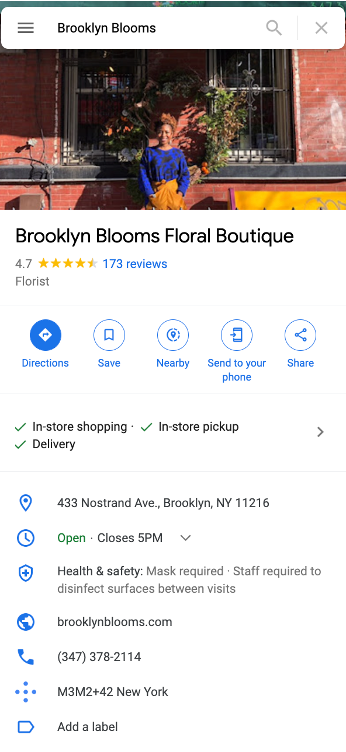
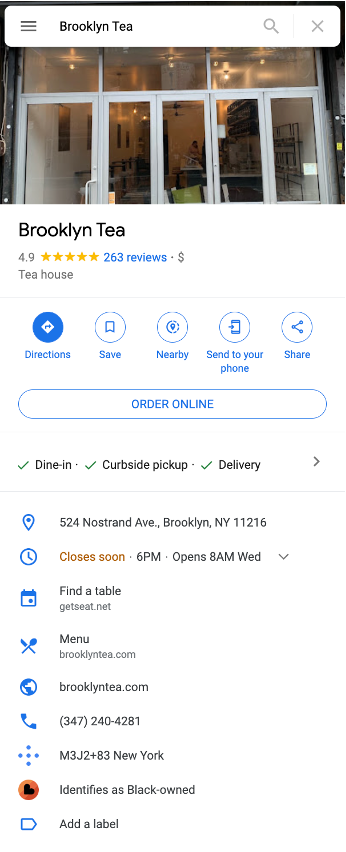
Three businesses, same platform, different choices


Brooklyn Blooms Google Maps listing
No identity tags

Brooklyn Blooms

Does not disclose any identity

Brooklyn Tea Google Maps listing
Black-owned

Brooklyn Tea

Discloses race

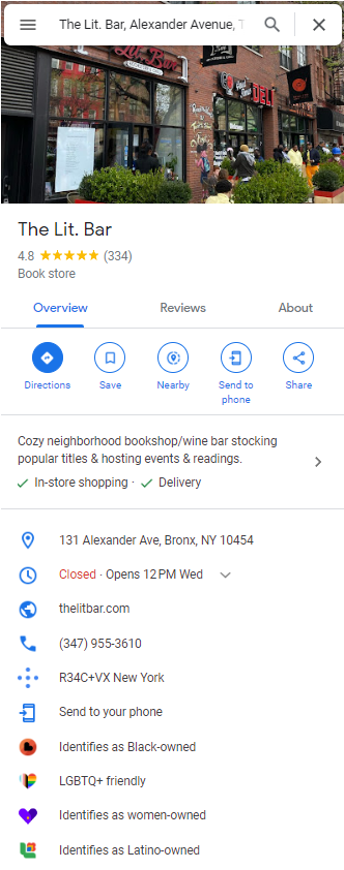
The Lit Bar Google Maps listing
Black-owned LGBTQ+ Friendly Women-owned Latino-owned

The Lit Bar

Discloses race, gender, and ethnicity

2 / 17
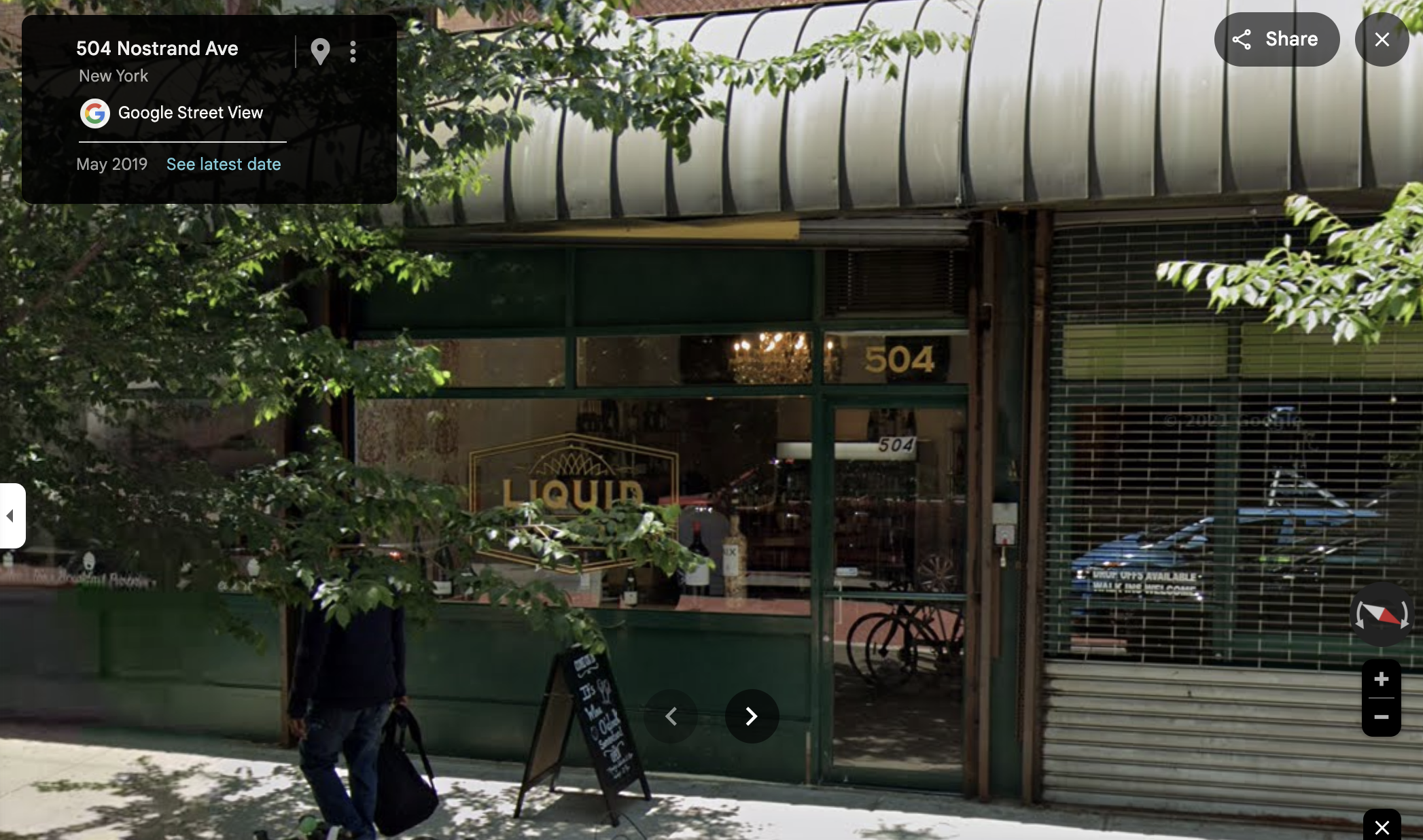
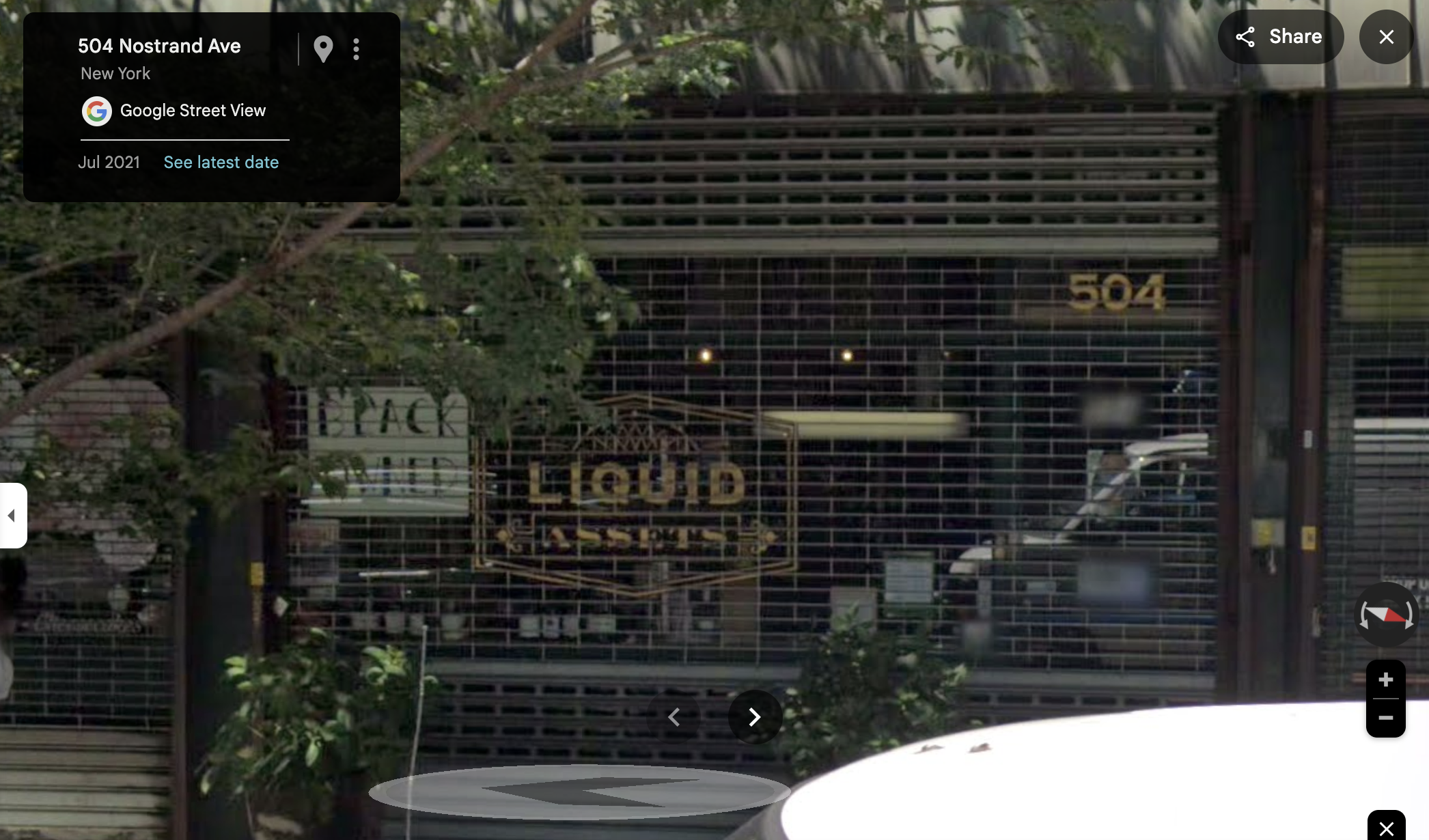
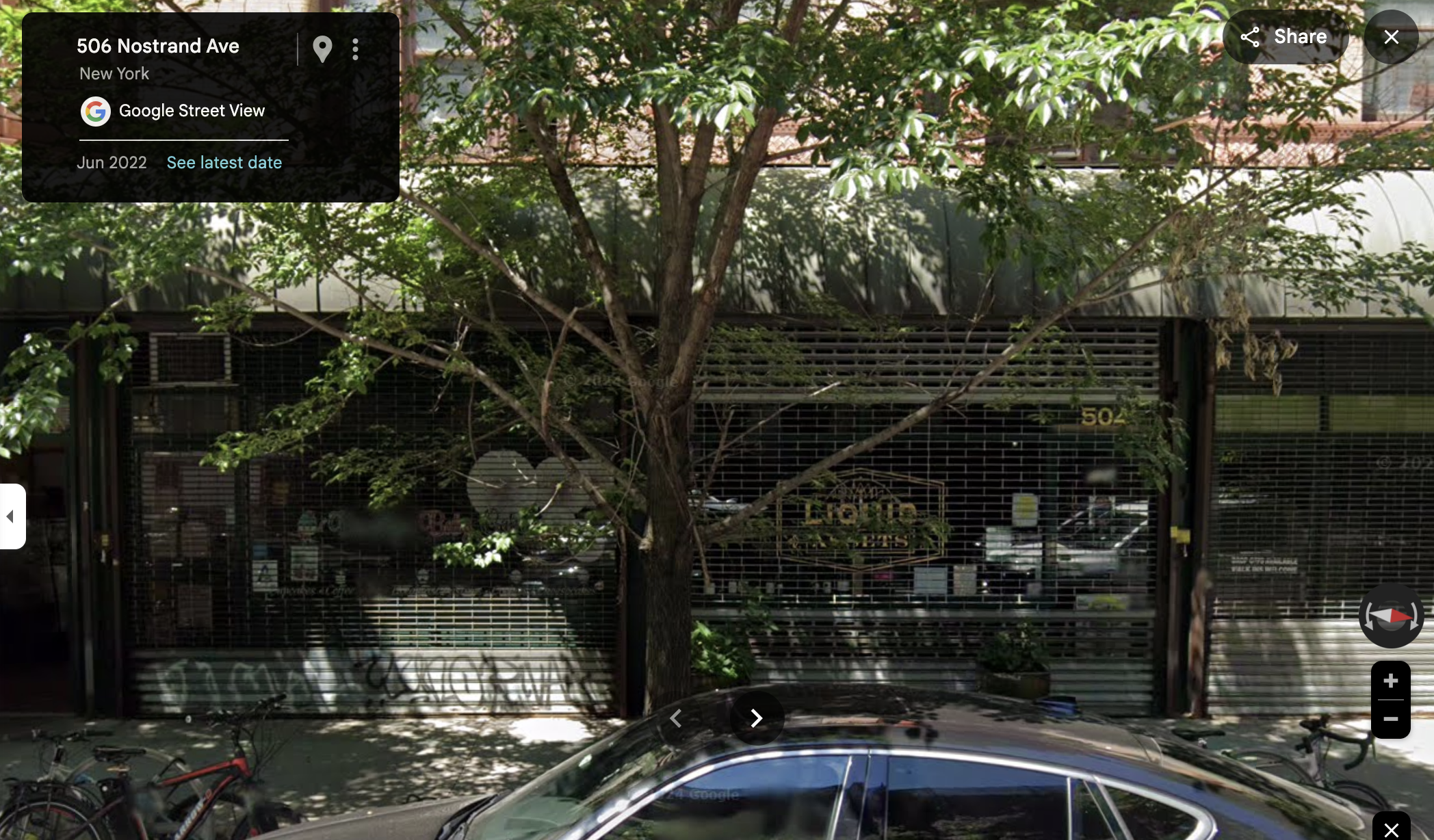
Liquid Assets · 504 Nostrand Ave · Bed-Stuy, Brooklyn
Liquid Assets, May 2019
Before May 2019
Liquid Assets, July 2021 — Black-owned sign
Disclosure July 2021
Black-owned ↑
Liquid Assets, June 2022
After June 2022

Source: Google Street View

3 / 17
The core tension

The same disclosure simultaneously attracts and repels


Black-owned businesses · 2020

"How The Black Lives Matter Movement Boosted Local Black-Owned Businesses"

GBH · 2021

"Black businesses still face systemic racism — even from well-meaning customers"

Washington Post · 2020

Asian-owned businesses · COVID-19

"The Best AAPI-Owned Businesses to Shop Right Now"

NBC News Select

"Reports of Anti-Asian hate crimes rose nearly 150% in major U.S. cities"

CBS News · 2021

Palestinian-owned businesses · 2023

"A Palestinian-owned business guide to show solidarity"

USA Today · 2023

"Jewish groups call for boycott of pro-Palestinian businesses"

Forward · 2023

Latino-owned businesses · 2024–2025

"Support Lake Street Latino businesses as immigration fears keep customers away"

Star Tribune · 2025

"Hispanic businesses in Montgomery feeling 'hunted' after triple-slaying"

NBC News · 2024

The solidarity signal is made necessary by discrimination exposure. Visibility attracts aligned customers and invites retaliation simultaneously.

Some find gains (Kim & Liu, 2025) · Others find clear penalties (Nunley et al., 2011; Doleac & Stein, 2013; Younkin & Kuppuswamy, 2018) · Some support is symbolic (Sharma, Frake & Watson, 2025)

Social identities have long been grounds for discrimination, marginalization, and even violence, and were historically concealed from potential consumers — Du Bois (1935) · Bonilla-Silva (1997) · Acker (2006) · Phillips & Kim (2009)
4 / 17
Research Question

"Why would a business owner voluntarily disclose a marginalized identity?"

5 / 17
Theoretical Positioning

Our priors are informed by two literatures


Identity Theory

Concealment is the default — disclosure has a cost to be managed

Goffman (1963)

Group membership is claimed when it enables favorable comparisons

Tajfel & Turner (1979)

A Black-sounding name costs 50% of callbacks

Bertrand & Mullainathan (2004)

Explains how stigmatized identities are managed — not when disclosure becomes a competitive signal.

Competitive Strategy

Advantage comes from resources that are valuable, rare, and hard to imitate

Porter (1980) · Barney (1991) · Wernerfelt (1984)

Disclosure is a signal — its value depends on what the receiver believes about the sender

Spence (1973)

Strategic positioning has asymmetric, context-dependent returns — the same choice attracts some stakeholders and exposes the firm to others

Alcácer & Chung (2007)

Explains when identity produces advantage — takes the disclosure decision itself as given.

Identity theory explains how stigmatized identities are managed. Strategy explains when resources produce advantage. This paper asks the question that precedes both: when does an owner treat their own identity as a resource at all?

Performance outcomes

Aneja, Luca & Reshef (2025)

Platform disclosure boosts foot traffic and orders — returns concentrated in Democratic, lower-bias areas.

Performance outcomes

Sharma, Frake & Watson (2025)

BLM drove symbolic support for Black-owned businesses but no meaningful increase in revenue.

Responds to calls to center marginalized entrepreneurs in management research — Phillips et al. (ROB, 2024); Phillips & Ranganathan (ASQ, 2025).

6 / 17
Theory — Framework

Disclosure is a two-stage decision


Stage 1 — All three required

A

Marginalized identity

Owner holds a stigmatized or discriminated identity

B

Positioning discretion

Owner-operator with direct agency over how the business presents

C

Legitimacy beliefs

Views identity as a potentially legitimate competitive dimension

Structural — any absent condition forecloses disclosure before Stage 2 is reached.

only if
all met

Stage 2 — Either suffices

J₁

Bounded solidarity

Co-ethnic in-group reciprocity · county Black pop. share

OR
J₂

Generalized solidarity

Values-aligned ally support · state Dem. vote margin

OR
K

Identity commitment

Moral obligation independent of market calculation

Perceived — owners differ even when structural conditions are identical.

7 / 17
Theory — Mechanisms

Two solidarity structures activate disclosure


J1 — Bounded Solidarity

Co-ethnic in-group reciprocity. Owners perceive that neighbors who share the same identity will extend preferential patronage.

Portes & Sensenbrenner, AJS (1993)

Ideal statement

I know my neighborhood will show up.

Proxy: county Black population share

J2 — Generalized Solidarity

Values-aligned out-group allies. Owners perceive the broader community embraces equity norms, reducing disclosure risk and adding cross-group demand.

Greenberg & Mollick (2017)

Ideal statement

The community broadly values what I'm doing.

Proxy: Democratic vote margin

H1

Disclosure increases with Black population share. (J₁)

H2

Disclosure increases with Democratic vote margin. (J₂)

H3

The J₁ effect attenuates in Democratic counties — J₂ substitutes for J₁ when ally demand is already active. (Partial substitution — the paper's decisive test)

8 / 17
Data + Results

Google Maps + U.S. Census + Presidential Election Results


4.99MU.S. business listings
3,144Counties covered
Sept. 2021Cross-section date

Identity tag system — opt-in, permanent until removed, publicly visible

Black-owned Women-owned LGBTQ+-owned Latino-owned Asian-owned Veteran-owned Indigenous-owned Disabled-owned

Google's identity tag system allows business owners to voluntarily self-report attributes. Tags appear as colored pill labels on the listing. Approximately 14,000 (0.28% of all listings; ~8.7% of 161,000 Census-identified Black-owned employer businesses) use the Black-owned attribute.

Unit of analysis: business listings geocoded to county. Outcome: Black-owned tag (0/1). Census RDC application in progress for county-level Black-owned business counts — the correct at-risk denominator.

Scope: Voluntary platform disclosure — theoretically distinct from MWBE certification or government-contracting-driven disclosure, both of which carry strong and interpretable selection pressures not present here.

US Census — ACS 5-Year Estimates

County-level Black population share and poverty rate. Anchors the bounded solidarity proxy and serves as a primary control.

MIT Election Lab — Presidential Returns

County-level Democratic vote margin, 2020 presidential election. Operationalizes generalized solidarity.

9 / 17
Theory — Predictions

The framework makes distinct predictions by quadrant


Low Black Pop.
High Black Pop.
High Dem.
J₁ weak + J₂ active J₂ provides some activation → lower-moderate disclosure
J₁ active + J₂ active Both triggers available → highest predicted disclosure
Low Dem.
J₁ weak + J₂ inactive Neither trigger active → lowest predicted disclosure
J₁ active + J₂ inactive Only bounded solidarity → moderate disclosure

H3 predicts that J₂ is an alternative activation pathway — in Democratic counties, co-ethnic density matters less because generalized solidarity is already active.

10 / 17
Data + Results

H1 ✓   H2 ✓   H3 ✓   — Solidarity structures predict disclosure


Quadrant finding

Low Black Pop
High Black Pop
High Dem
0.12%J₂ only
0.36%J₁ + J₂
Low Dem
0.08%Neither
0.12%J₁ only

Q1 is 4.5× Q3. J₁ alone barely moves the needle — political context is the multiplier.

Main regression — logit, SEs clustered by county

DV: Black-owned tag H1
Bounded
H2
Generalized
H3
Interaction
H4
Discriminant
Black pop. share (%) 0.090*** 0.140***
(0.010) (0.023)
Dem. vote margin 0.015***
(0.002)
Dem. majority (binary) 0.481***
(0.076)
Black pop. × Dem. majority −0.090**
(0.031)
Veteran-led × Dem. majority 0.002
(0.022)
State + industry FE, controls
N (businesses) 152,794

*** p<.001  ** p<.01. H4 interaction p=.93 — discriminant validity confirmed.

The negative H3 coefficient is the key result: in Democratic counties, J₂ is already active — so the marginal contribution of co-ethnic density shrinks. Bounded and generalized solidarity are partial substitutes, not complements.

11 / 17
Denominator Validation

Anomaly, new data, revised explanation


01

Anomaly

Only 0.29% of Google Places businesses carry a Black-owned tag.

If this is a strategic decision, who is making it — and who could? There is no ground-truth denominator in the Google Places universe.

Committee challenge: the denominator problem has no obvious solution in the main data.

02

New Data

SBA PPP FOIA data: 11.7 million loan recipients, self-reported race at application.

776,414 unique Black-owned businesses provide a government-verified at-risk population. 10,009 match to Google Places listings.

True denominator: verified Black business owners who could have disclosed.

03

Revised Understanding

True rate: 7.5%. Political climate effect strengthens. Co-ethnic density disappears.

The pattern divergence demands explanation: county-level H1 reflects who is in the denominator, not a causal mechanism. The theory holds at the right level of analysis.

Abduction: anomaly → new data → stronger, more precise theory.

Abductive inference: the unexpected pattern (H1 vanishes; H2 strengthens) reveals that the county-level analysis captures selection into the denominator, not the causal mechanism of interest — pointing toward a multi-level theoretical account (Timmermans & Tavory, 2012).

12 / 17
Denominator Validation · SBA PPP Data · N = 7,195

The political climate finding holds — and strengthens — in the verified sample


True at-risk population

Black-owned PPP borrowers

824K
↓ de-duplicated

Unique Black-owned businesses

776K
↓ matched to Google Places

With complete covariates

7,195
7.5% true disclosure rate

vs. 0.29% using all Google Places businesses as denominator

Disclosure rate by political climate quintile · verified Black-owned borrowers

State political climate (Most Republican → Most Democratic)

6.1%
6.4%
8.9%
7.3%
7.6%
Most
Rep.
Swing Most
Dem.

✓ Directional increase · H2 holds in verified sample

When the denominator is verified Black-owned businesses, political climate is the primary structural driver of disclosure. The flat H1 pattern is a methodological insight: co-ethnic density predicts who is in the denominator — not who, among them, chooses to disclose.

13 / 17
Extending the findings · 2021 → 2026

Disclosure isn't a one-time signal — it persists where solidarity is high


79.5%

Democratic counties

75.0%

Republican counties

4.5 pp gap
p < .05

Of 13,138 disclosers in 2021, 78.8% overall still disclosing in 2026. The same solidarity structures that activate disclosure sustain it.

What predicts retention?
Black population share (β=0.925, p<.001) and Democratic vote margin (β=0.608, p<.001) — the same solidarity structures that activate initial disclosure also sustain it. Extends H1 and H2 to persistence.

Where do owners drop off? Not the Deep South — structural thinness.

NH OR CO IA NM UT

Where co-ethnic and ally demand is too thin to sustain the signal, disclosure quietly lapses.

Drop-off correlates with both lower Black population share and lower Democratic margin (r ≈ −0.21, p<.0001 each) — consistent with the bounded and generalized solidarity mechanisms operating jointly on persistence, not just entry.

14 / 17
Interview voices · Ann Arbor & Detroit Metro

The decision in owners' own words


"I didn't realize how radical it was to say, I'm creating a black space for black people by black people... my being here, even being a successful entrepreneur, was an act of resistance."

Entrepreneurship educator · Detroit Metro · K: identity as resistance

"I'm going to drive that angle. But then there's also the dangerous side — I'm Jewish, but I'm not going to drive on that... that can be dangerous for business."

Boutique owner · Ann Arbor · Same owner — opposite disclosure across two identities

"I want to win the blind taste test every time. I don't want people to be like, 'Yeah, I liked hers because she was a white girl from Michigan and I identify with that.' I don't care about that. I think that is a crutch to me."

Food & beverage owner · Ann Arbor · Product Purist — identity as competitive dimension, rejected

"When we opened we were only 26... Koreans would come in from the suburbs. It was like a cult of party Koreans. And it did play a big role."

Restaurant owner · Ann Arbor · J₁: bounded solidarity through co-ethnic visibility
15 / 17
Contribution

So what?


Identity as a Conditional Strategic Resource

Theorizes the structural prerequisites for voluntary identity disclosure — separating Stage 1 (enabling conditions) from Stage 2 (activation triggers). Explains who enters the calculation, not just when it pays.

Solidarity as a Geographically Structured Mechanism

Bounded and generalized solidarity are distinct mechanisms — partial substitutes, not complements — that predict disclosure rates with 3–4× variation across U.S. counties.

Where this goes next

Census RDC

County-level Black-owned business counts — the correct at-risk denominator. Application submitted April 2026; awaiting review.

Companion Qualitative Study

In-depth interviews examining individual strategic orientations. Pilot interviews underway — Ann Arbor and Detroit Metro.

16 / 17
Equitable Opportunity Conference · McGill Desautels · May 15–16, 2026

Thank You


Questions, pushback, and suggestions on theory, data, or framing are all welcome.

Kyle McCullers · University of Michigan Ross

kylemcc@umich.edu

I'd love to hear from you — on the theory, the data, or anything else.

17 / 17